
Film Camera Light Meters Aren’t Always the Best Way.
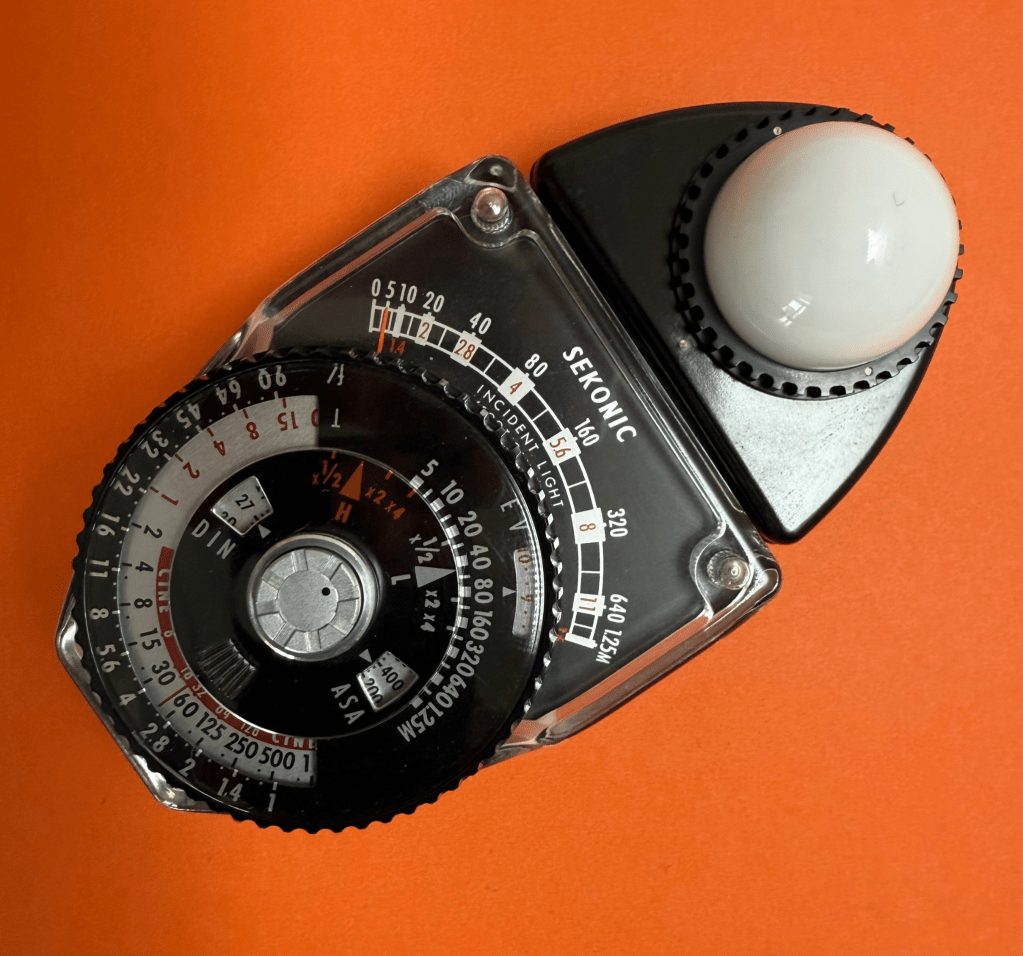
Through the lens (TTL) light meters are by far the easiest way to meter for a shot, but can often be fooled by bright backgrounds or predominantly dark or light areas in the subject being photographed. That shot at the beach didn’t quite come out right, showing an almost silhouette against the very bright sand and water that rendered normally in the picture.
Incident light meters are a vital part of my arsenal that I use routinely and systematically, and especially on medium format cameras that have no built in light meter. The vintage Sekonic (which can be quite expensive to procure) shown in the photo is a trusted partner, but there are numerous other options that a beginning photographer can find.
The concept of incident metering is simple: The meter registers the amount of light falling on the white dome (the ping pong ball). To take a reading, the photographer will stand at the subject holding the meter facing the camera to measure the light. You have probably seen photographers and cinematographers doing this in the movies. This will assure that the exposure is correct for the subject you are shooting regardless of backlighting or shadows in the scene.
Another trick is to take a TTL reading with the camera and compare. Sometimes you might want to just split the difference!
This one-minute read can’t go into all of the various techniques for light metering, but this is good start and something to learn more about.
- gregory gammon / http://www.vinylfye.com
 One-Minute Reads about Film Photography
Leave a comment